The Category I Almost Cut That Turned Out to Be the Heart of This Shop
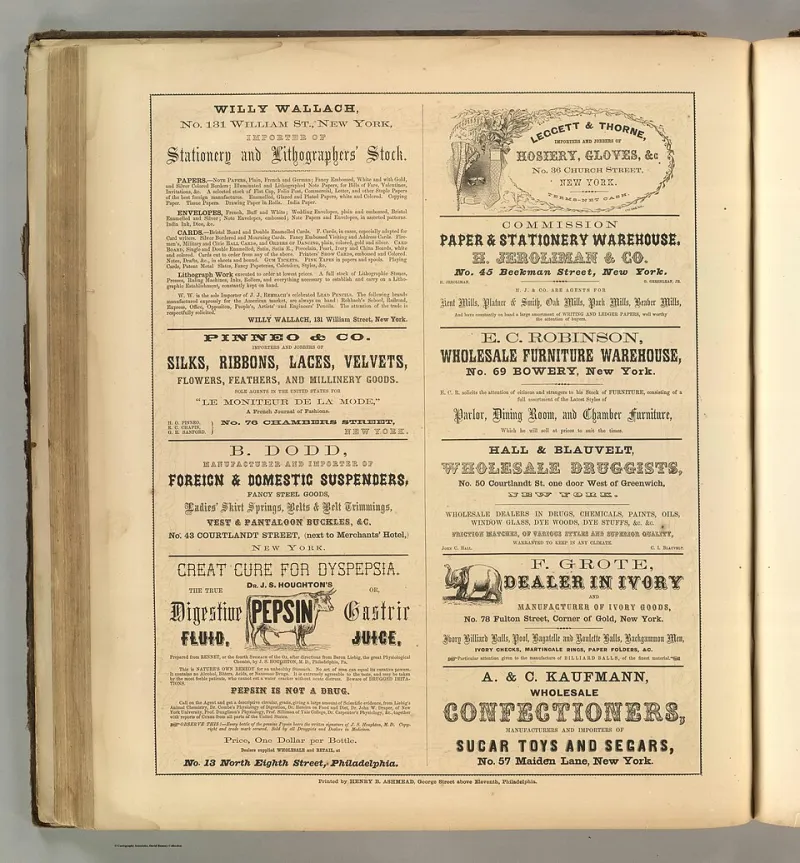
Photo: Colton, G.W. Ashmead, Henry B., Public domain, via Wikimedia Commons
If you'd asked me eighteen months ago which product category was the weakest link in this shop, I would have told you immediately: the stationery and paper goods section.
Notebooks. Writing cards. A few well-made pens. Some correspondence sets.
The numbers weren't exciting. Compared to other categories, turnover was slow. The margins were fine but not exceptional. Nobody was posting about a notebook the way they'd post about a striking piece of home décor. It never went viral. It never had a moment.
I had a spreadsheet open, a cursor hovering over the delete option, and a pretty convincing internal argument for letting it go.
Then I had a phone call that changed everything.
What the Numbers Were Telling Me (And What They Weren't)
Metrics are genuinely useful. I'm not going to pretend otherwise. But they're also reductive in ways that can lead you somewhere wrong if you're not careful.
What the numbers on my stationery section showed was that it moved slowly. What they couldn't show was why people bought it, what it meant to them, or what role it played in how they experienced the shop as a whole.
I'd been measuring the category the same way I'd measure a trending product — volume, velocity, margin contribution. And by those measures, it was a middling performer.
But I was asking the wrong questions.
The Conversation That Reframed Everything
A customer — I'll call her Maria, which isn't her name but she knows who she is — reached out after placing what I later realized was her fourth or fifth order. Most of her purchases had been in other categories, but she'd picked up a correspondence set from the stationery section a few months earlier.
She wasn't writing to complain. She wanted to tell me she'd used the cards to write letters to her mother during a difficult stretch of health issues her mom was going through. She said there was something about the weight of the paper and the simplicity of the design that made the act of writing feel more intentional. More worth doing.
She said she'd tried other cards and they'd felt flimsy. Disposable. Like the message would feel disposable too.
"I needed it to feel like it mattered," she wrote. "And yours did."
I sat with that for a while.
The Gap Between What Sells and What People Need
Here's the thing about curating products versus just selling them: you're not only in the business of moving inventory. You're in the business of meeting people at a moment in their lives and giving them something that helps.
Sometimes that moment is a birthday gift. Sometimes it's a home refresh. And sometimes — more often than the metrics will ever show — it's something quieter and more personal.
The stationery section wasn't performing like a trending product because it wasn't serving a trending need. It was serving a human one. The need to communicate with care. The need to slow down and put something on paper. The need to give a piece of correspondence the kind of weight that says this matters.
That's not a need that creates viral moments. But it's a need that creates loyal customers.
What I Was Almost About to Lose
After talking to Maria, I started looking back through messages and reviews for the stationery category specifically. I hadn't paid close attention before — the numbers had already told me what I thought I needed to know.
What I found was striking. The reviews were short, but they were unusually personal. People mentioned specific occasions. A thank-you note after a job loss. A card for a friend going through a divorce. A letter written to a grandparent they hadn't spoken to in years.
Nobody was writing that kind of review about a trending home accessory.
The category had a lower volume of reviews than others, but the emotional register of those reviews was completely different. These weren't people commenting on aesthetics or function. They were telling me what they'd done with the thing. What it had enabled.
I'd been measuring the wrong output entirely.
Rethinking What "Performance" Actually Means
After that, I went back to the spreadsheet with a different lens.
I looked at repeat purchase rates segmented by first-purchase category. Customers who'd started with stationery had one of the highest return rates in the shop. They weren't buying paper goods every month — that's not how stationery works — but they were coming back. Exploring other categories. Becoming, in the truest sense, regulars.
The stationery section wasn't a revenue driver. It was a trust driver.
It was the part of the shop that said: we take the small, careful things seriously here. And that message was reaching people who needed exactly that kind of shop in their lives.
Cutting it would have saved me a small amount of inventory overhead and cost me something I couldn't have easily rebuilt.
The Broader Lesson for Anyone Curating Anything
If you're running a shop, a newsletter, a creative practice — anything where you're making choices about what to include and what to cut — I'd encourage you to build in a check before you drop something based purely on numbers.
Ask yourself: do I understand why people are buying this? Not just how many are buying it, but what need it's meeting and what it means to them when it does?
Sometimes the answer confirms what the data already told you. But sometimes — and this is the part worth protecting — the answer reveals something the data was never equipped to capture.
The stationery section is still here. It's not the biggest part of the shop. It probably never will be.
But it's one of the most important things I carry. And I almost threw it away because I forgot to ask the right question.
Don't make that mistake. The metrics tell you what's happening. Only the people can tell you why.